ARGO CULTURAL CENTER
ARCHITECTURE: Vrantsi
INTERIOR ARCHITECTURE: Vrantsi
YEAR: 2022
STATUS: Study
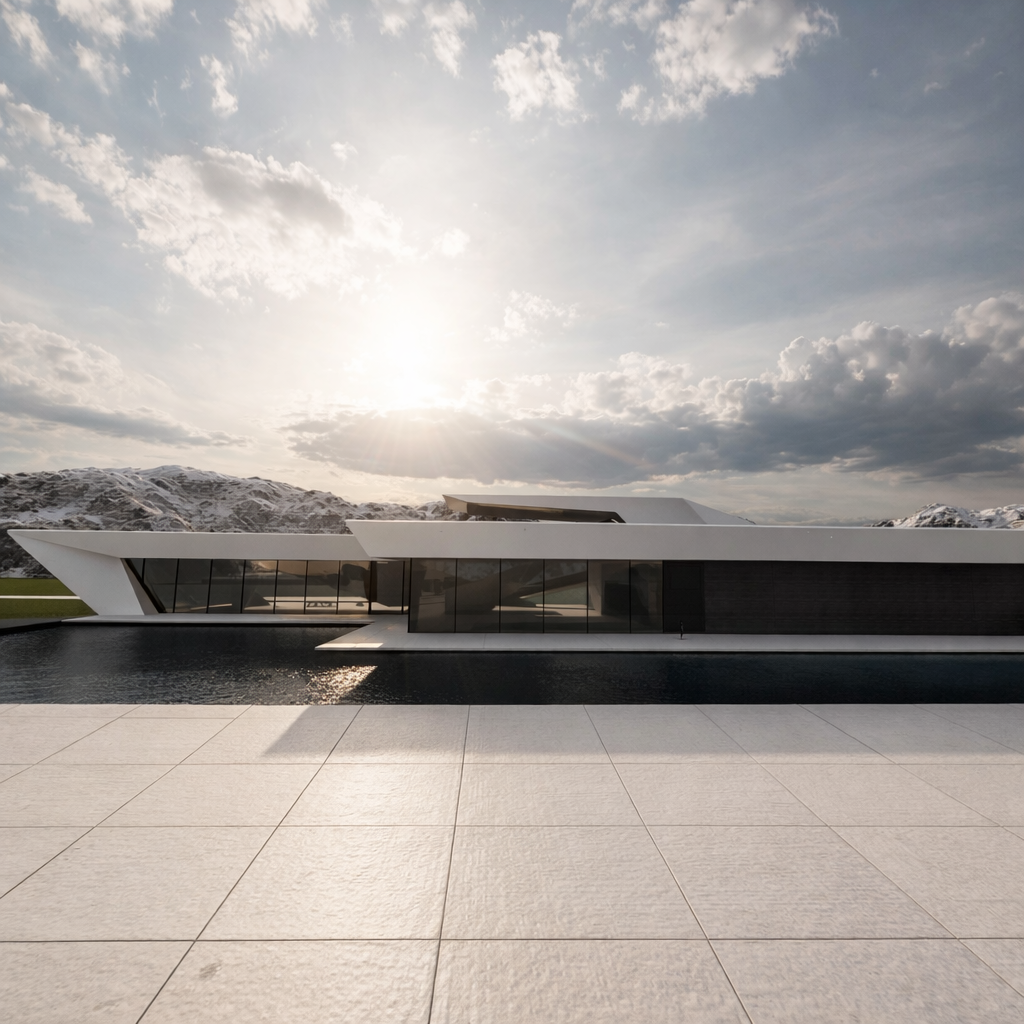
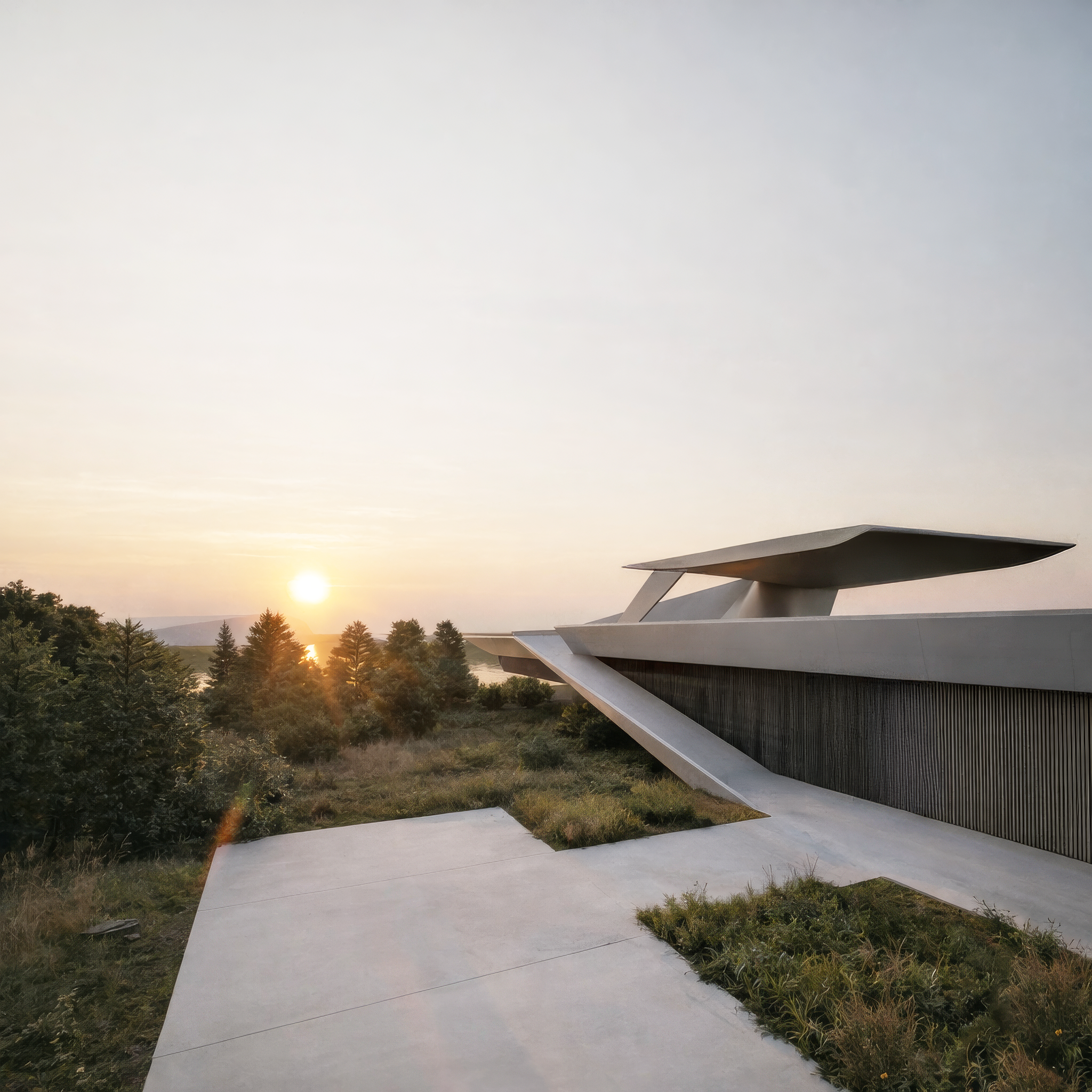
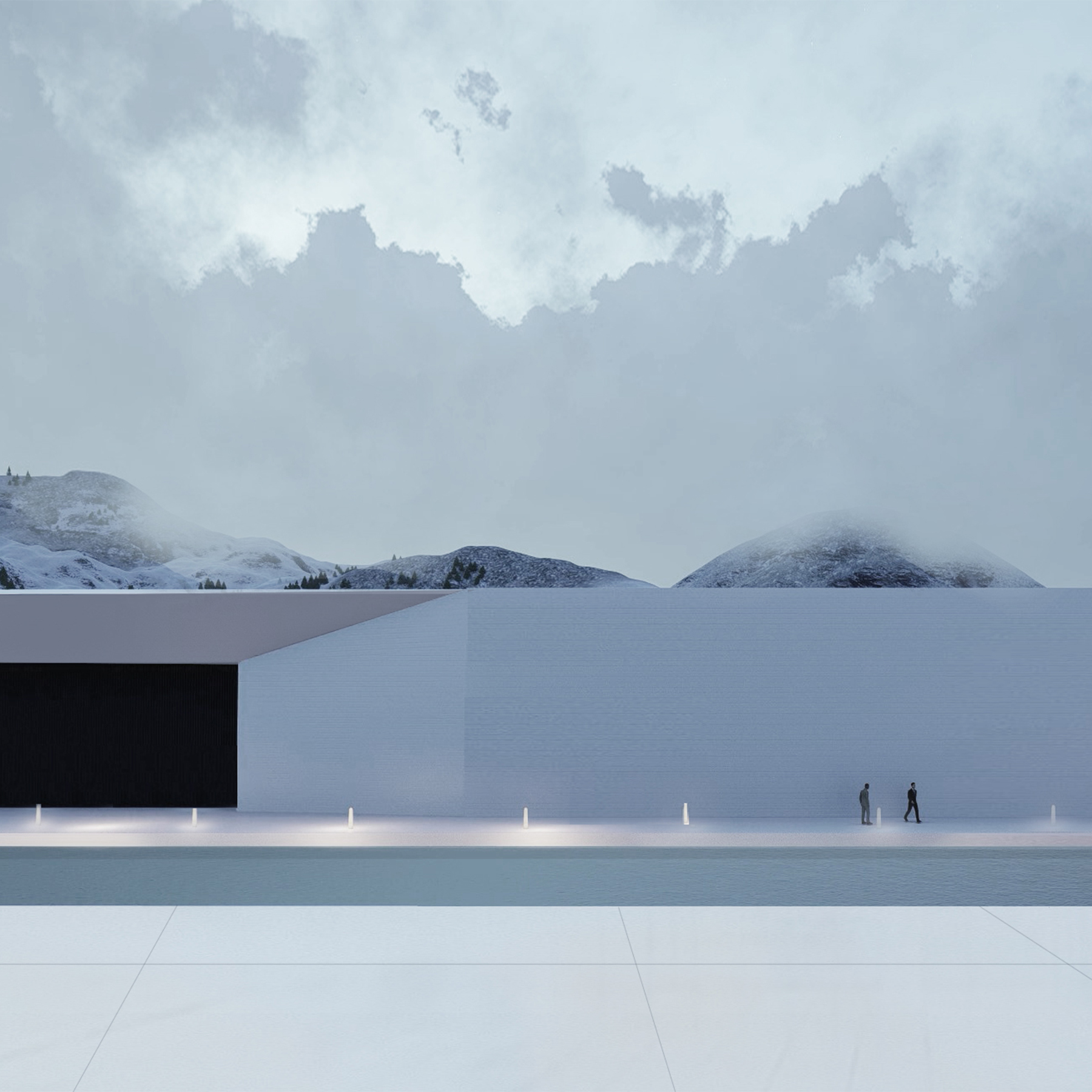
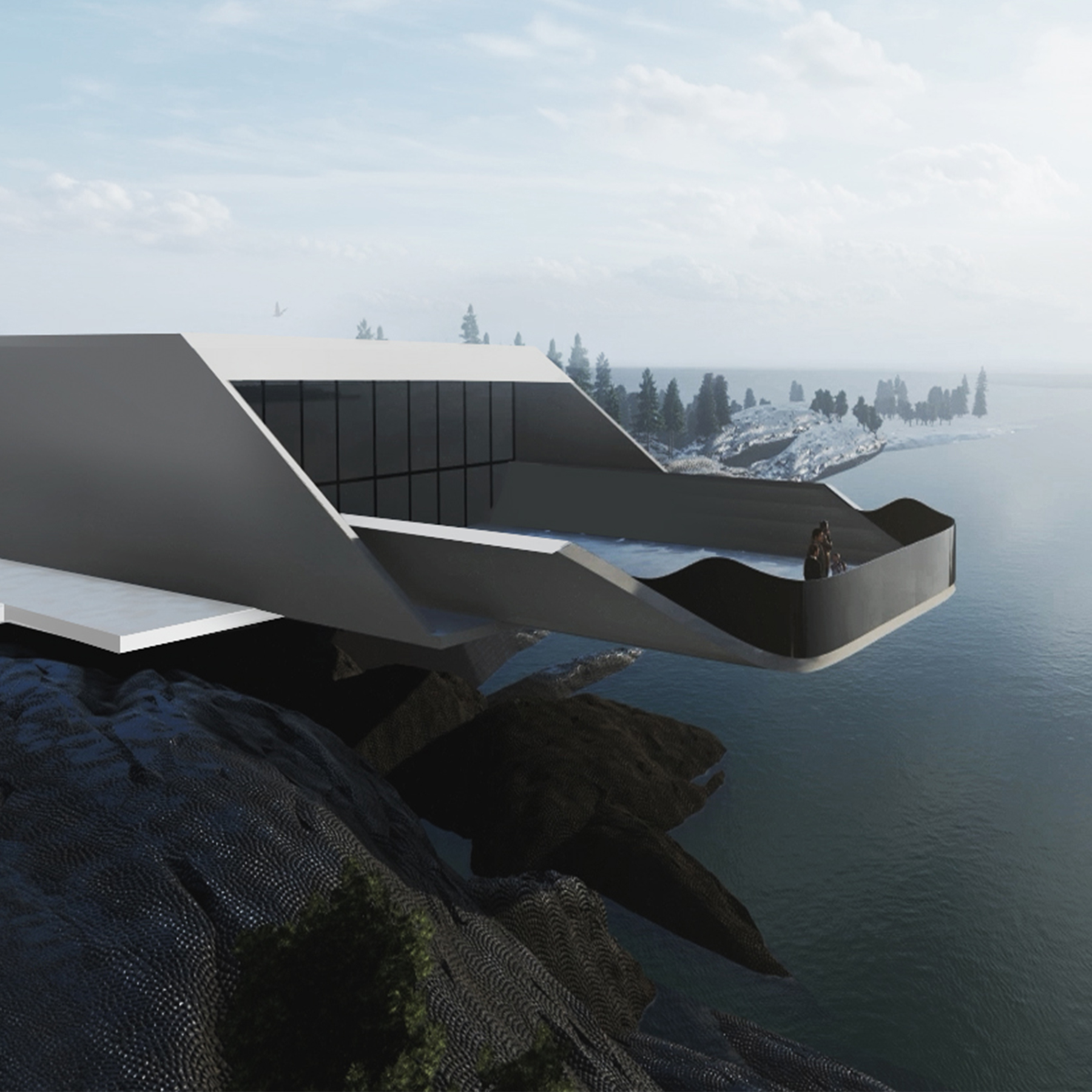
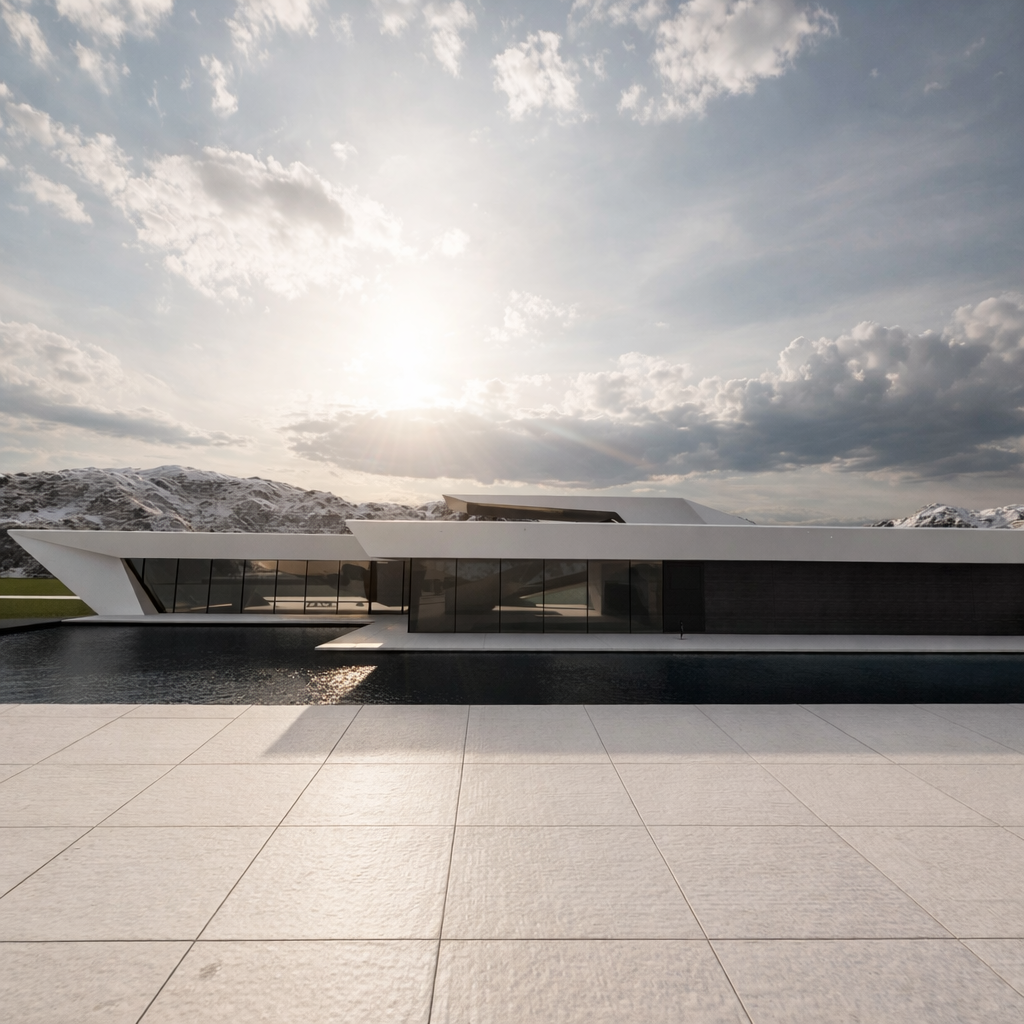
Argo Cultural Center is conceived as a mediating structure between man, art, and nature, where architecture becomes an extension of the surrounding landscape. Positioned at the edge of water and terrain, the building unfolds as a series of sharp, horizontal volumes that appear to hover above reflective surfaces, reinforcing a continuous dialogue between built form and environment.
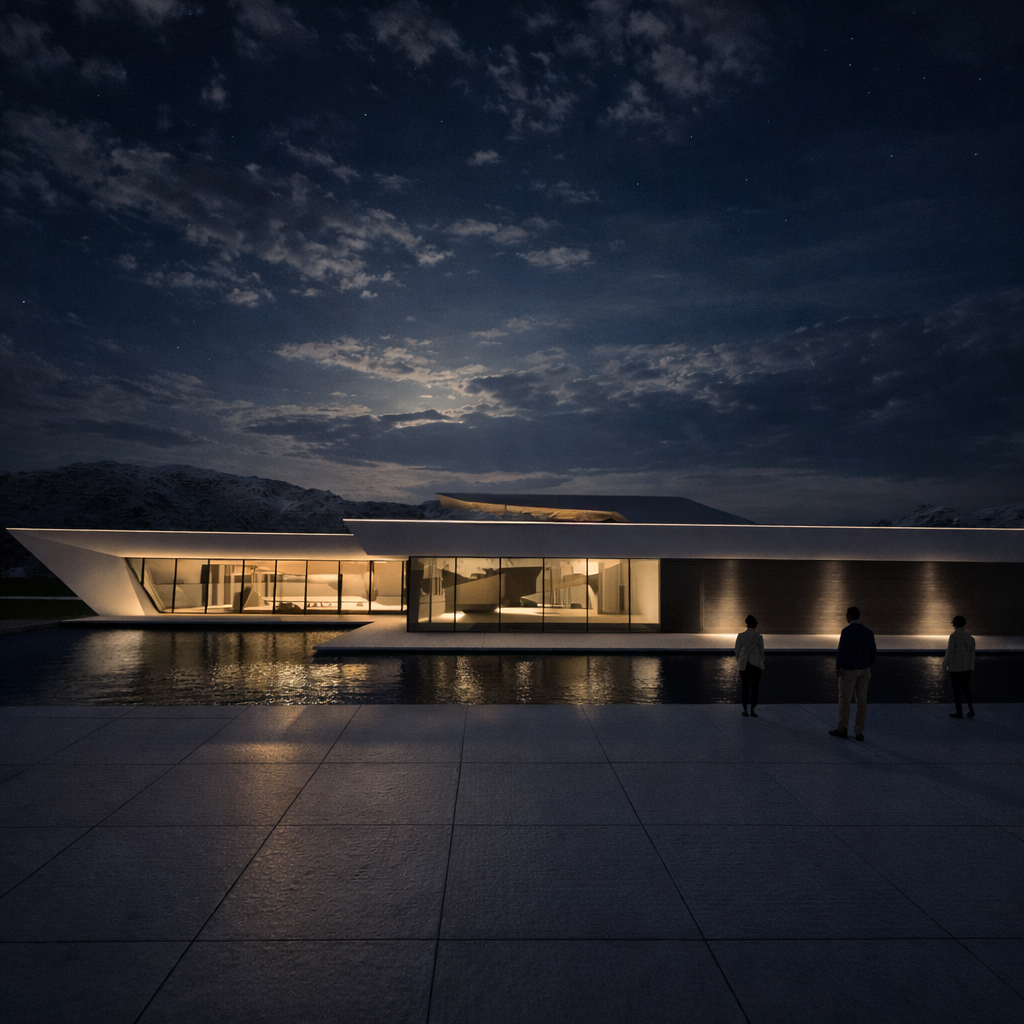
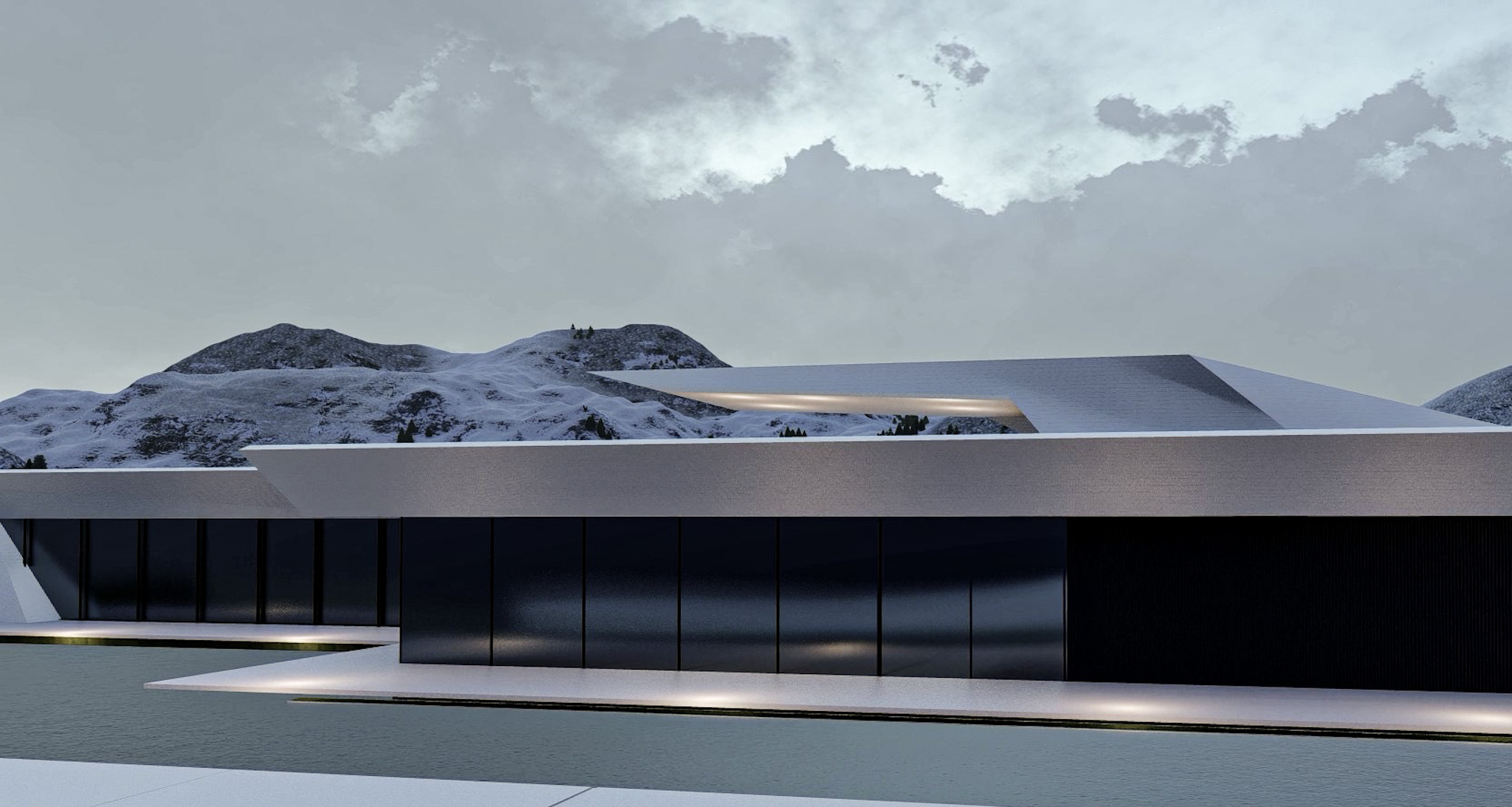
The design is defined by its dynamic geometry inclined planes, cantilevered elements, and elongated profiles generate a strong, sculptural identity. These gestures are not only formal but spatial, framing views, directing movement, and creating moments of compression and release. The building reads as a fluid composition, shifting in perception from day to night, where natural light and artificial illumination redefine its presence.
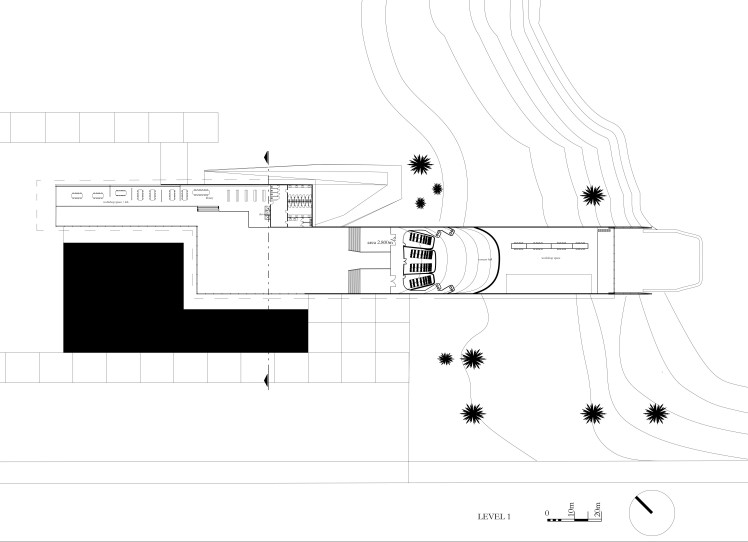
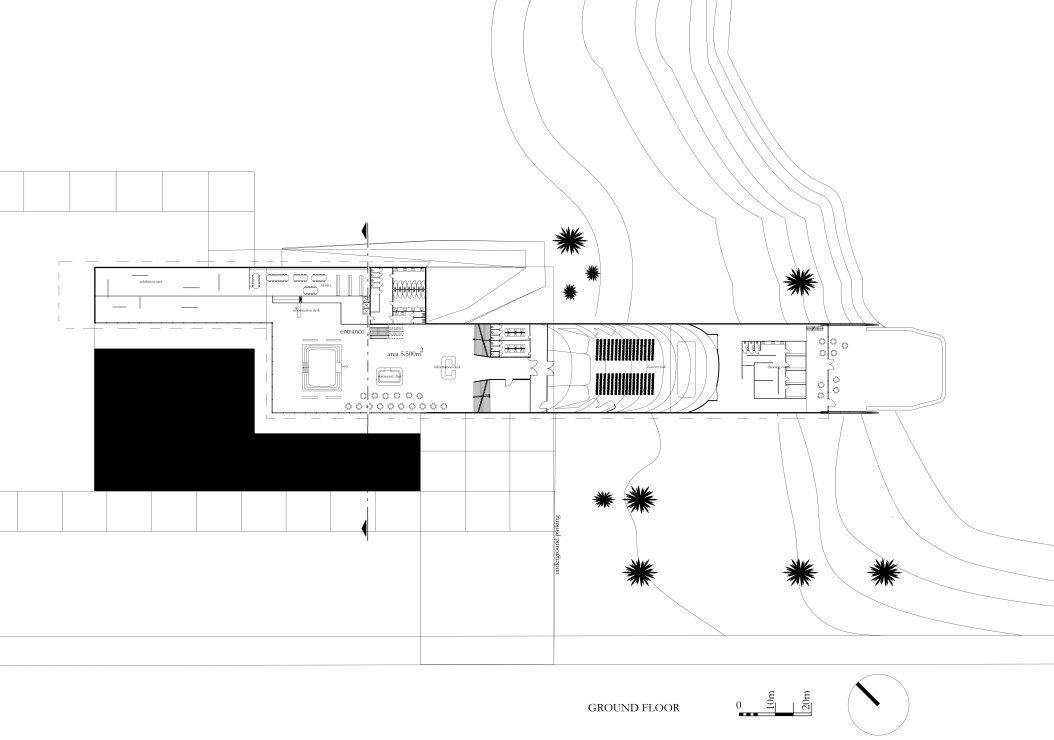
The cultural center is organized across two primary levels. The ground floor accommodates the main public functions, including exhibition spaces, a concert hall, and a bar-restaurant, all connected through a central foyer. The upper level hosts more introspective uses such as the library, reading areas, and workshop spaces. Circulation is seamlessly integrated through vertical cores, ensuring full accessibility and continuity of movement.
Materiality emphasizes contrast and precision. A refined palette of exposed concrete, steel, and extensive glazing defines the structure, balancing solidity with transparency. Large glass surfaces dissolve the boundary between interior and exterior, while the water element amplifies reflections, enhancing the building’s lightness and visual depth.
Developed through parametric design processes, the project responds to both environmental and spatial constraints, optimizing orientation, structure, and performance. Argo ultimately proposes a contemporary cultural landmark, an architectural form that operates simultaneously as infrastructure, landscape, and inhabitable sculpture.