ARCHITECTURE: Vrantsi Chrysi
YEAR: 2026
STATUS: Completed
The project proposes a pilot model for off-grid living, introducing autonomous micro-habitats carefully integrated into the fragile Utah desert. Designed for extreme climatic conditions, each unit employs passive strategies such as solar orientation, deep overhangs, and natural ventilation to reduce energy demand.
Energy is generated through a discreet ground-mounted photovoltaic field, preserving the architectural purity of the structures while ensuring optimal performance. Combined with battery storage and water recycling systems, the project establishes a self-sufficient framework adaptable to remote environments.
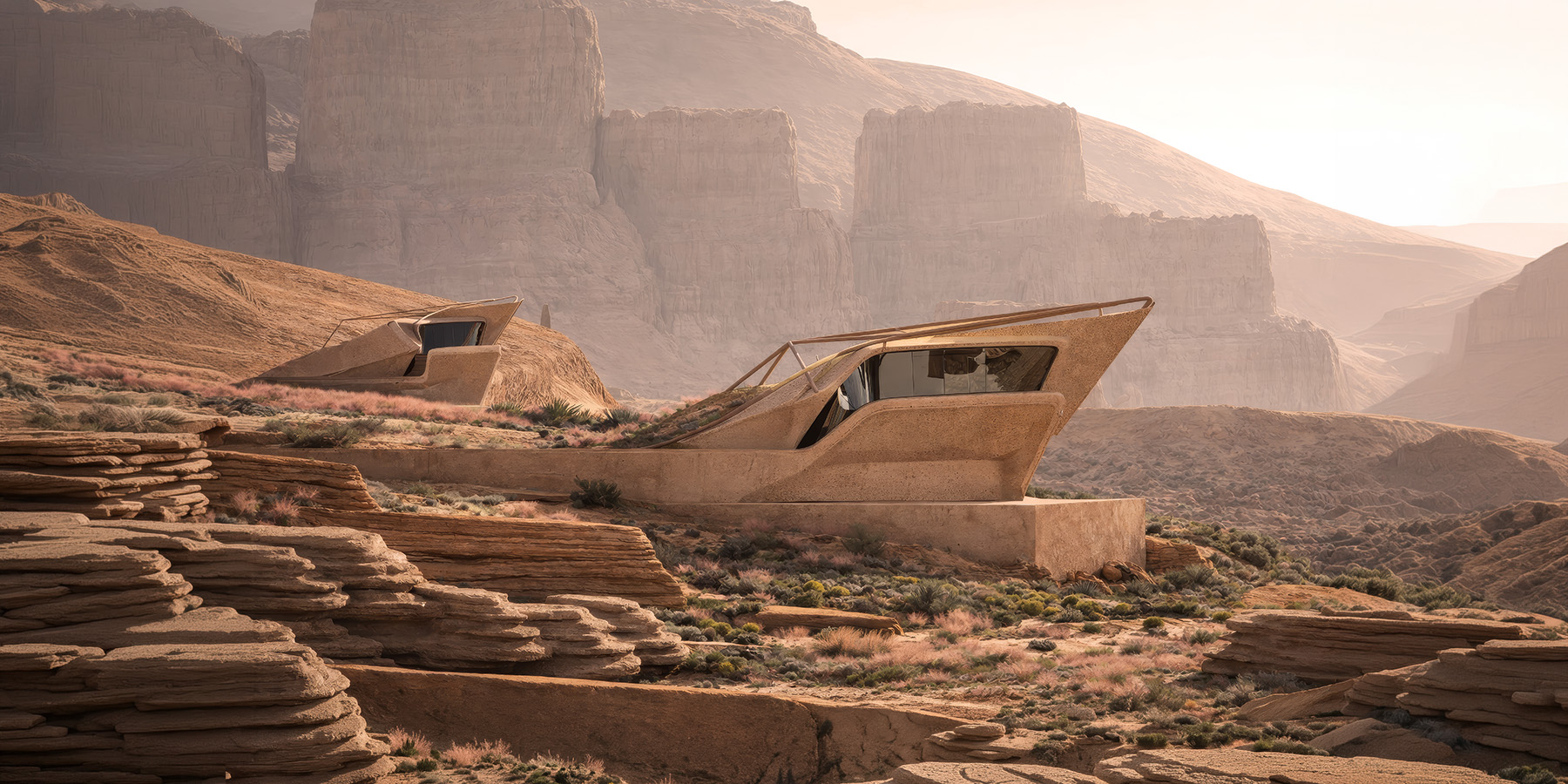
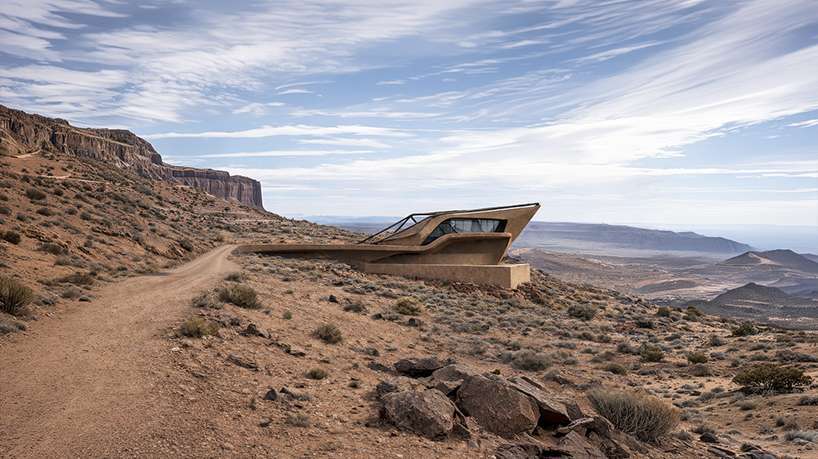
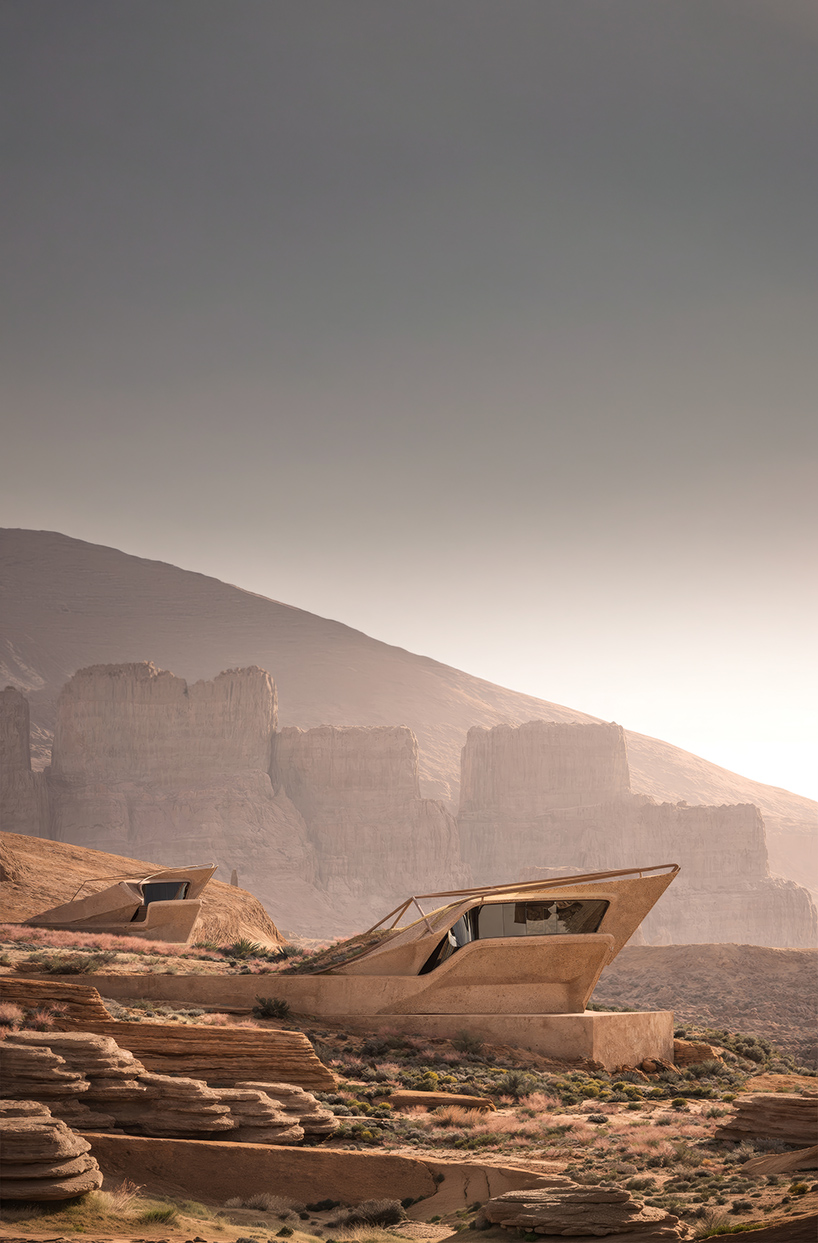
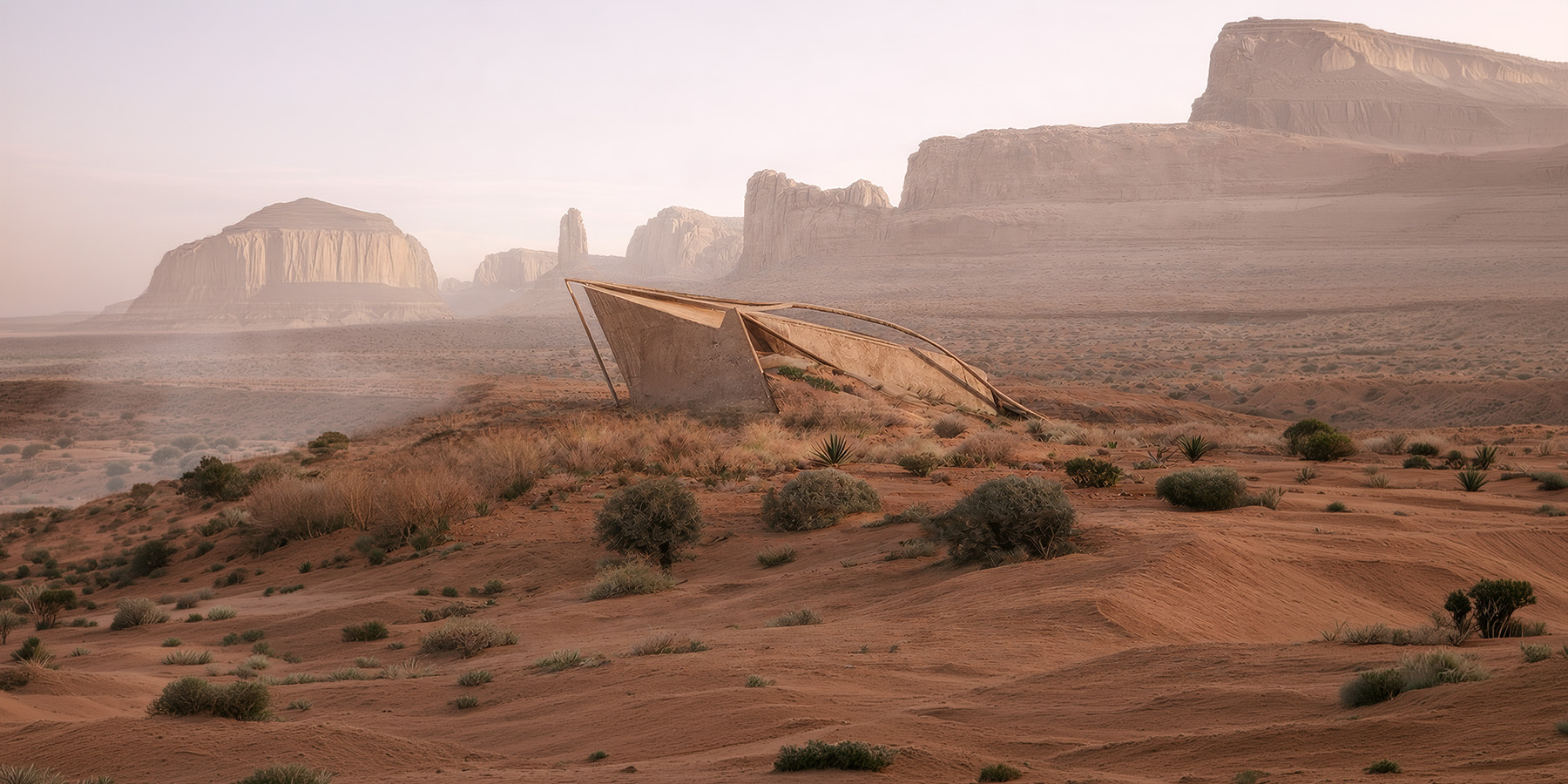
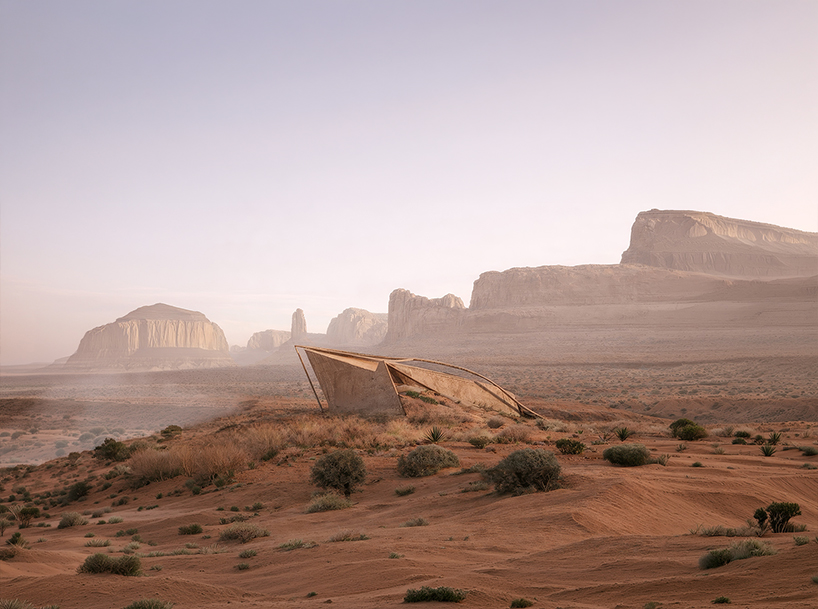
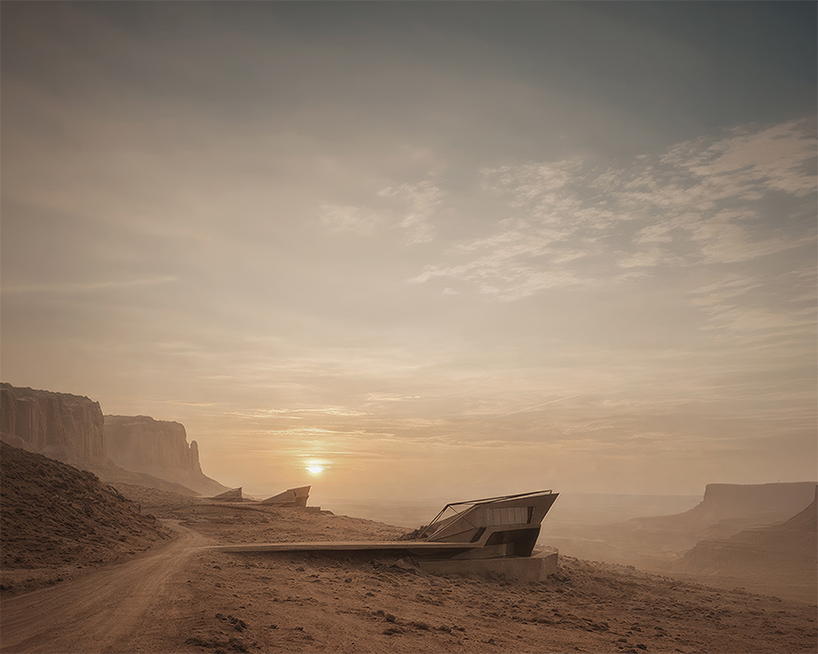
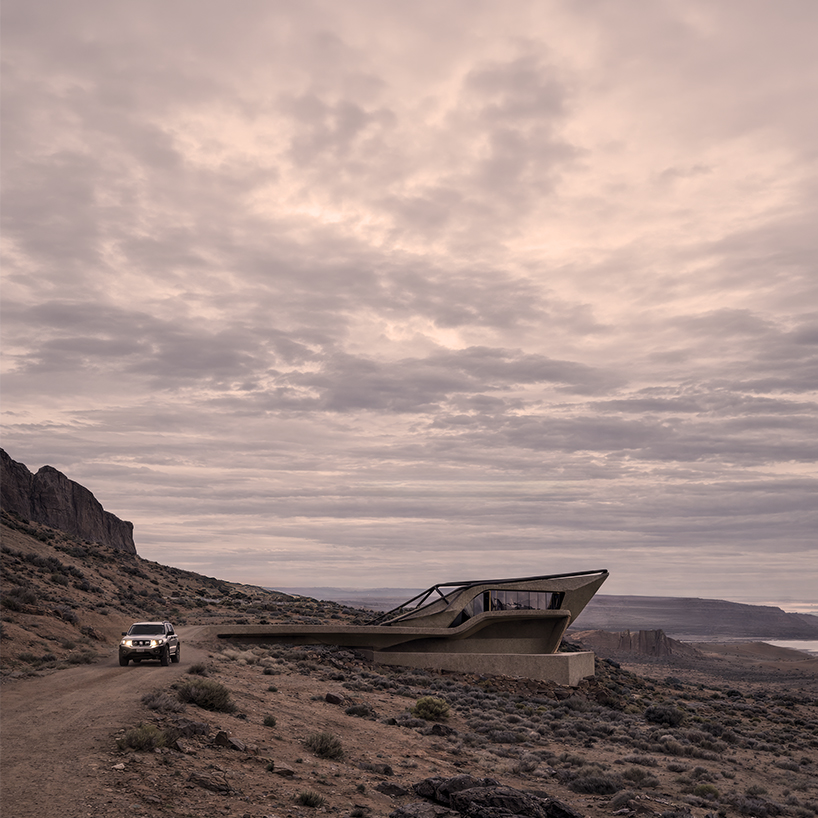
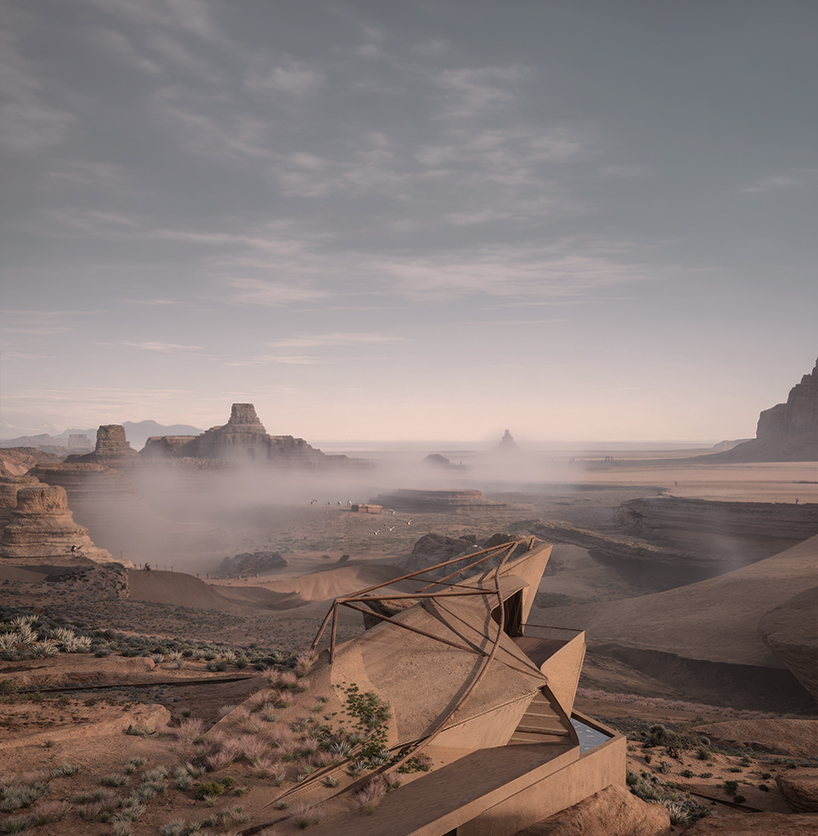
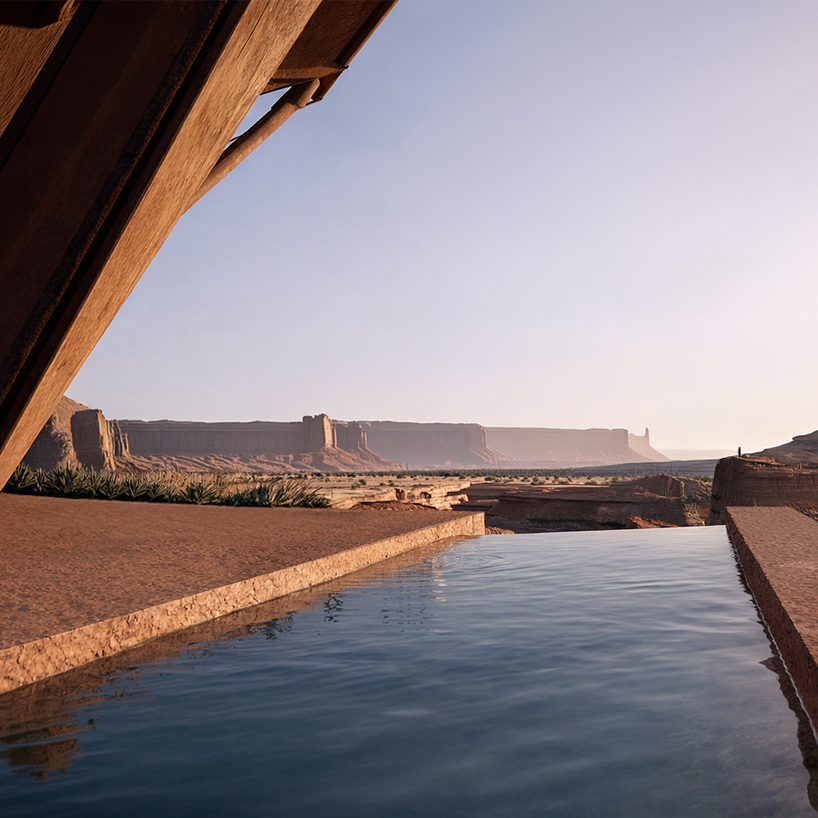
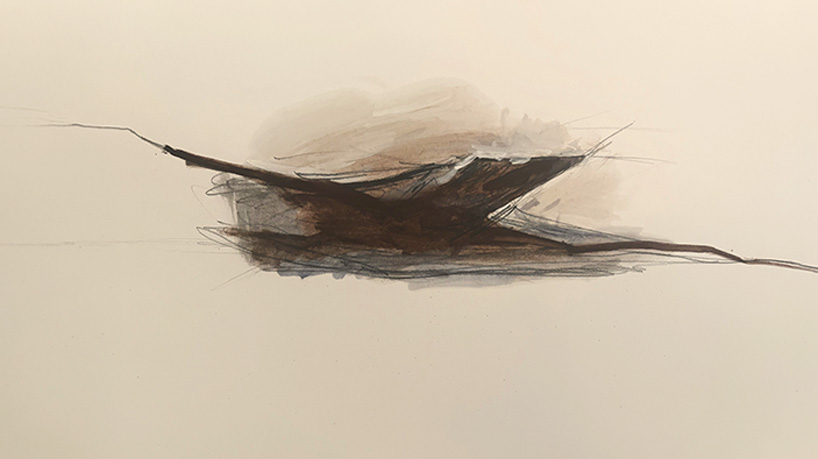
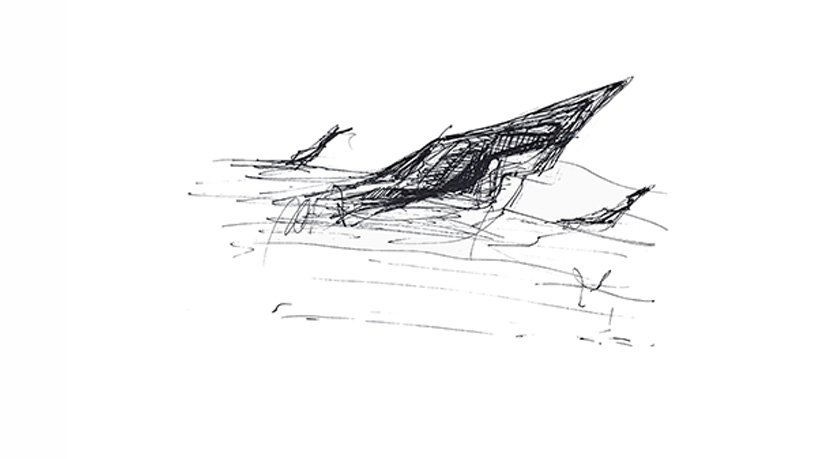
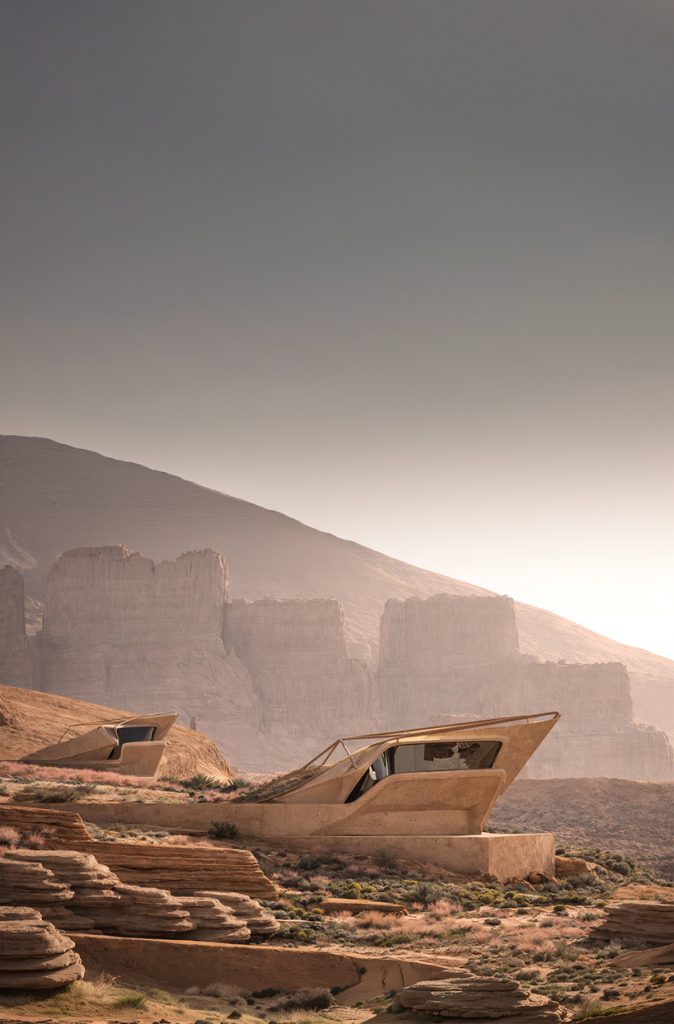
The architecture emerges from the geometries of the surrounding terrain, translating the forms of mesas and eroded rock formations into a contemporary language. Conceived as an inhabitable outcrop, the elongated prism appears partially embedded within the ground, blurring the boundary between natural and built.
Inclined planes and sharp volumes echo the desert’s topography, allowing the building to read as a geological extension rather than an imposed object.
Living is framed as an act of observation. Private spaces are positioned below ground for thermal stability and privacy, while communal areas project outward, capturing panoramic views of the landscape.
A continuous, gently inclined circulation unifies the interior, guiding movement through shifting relationships between enclosure and openness.
Rammed earth, using locally sourced soil, forms the primary structure—providing thermal mass while visually anchoring the building to its context. Combined with concrete, concealed steel, and high-performance glazing, the system enables both solidity and openness.
The project ultimately explores architecture as a dynamic condition—where form, material, and landscape converge—creating a dwelling that functions equally as shelter and as an instrument for experiencing the desert.