ARCHITECTURE : Vrantsi Schematic Design // Design Development and Programming
Habitable Outcrop
A Tectonic Interpretation of the Desert Landscape | Desert Observatory House, Utah
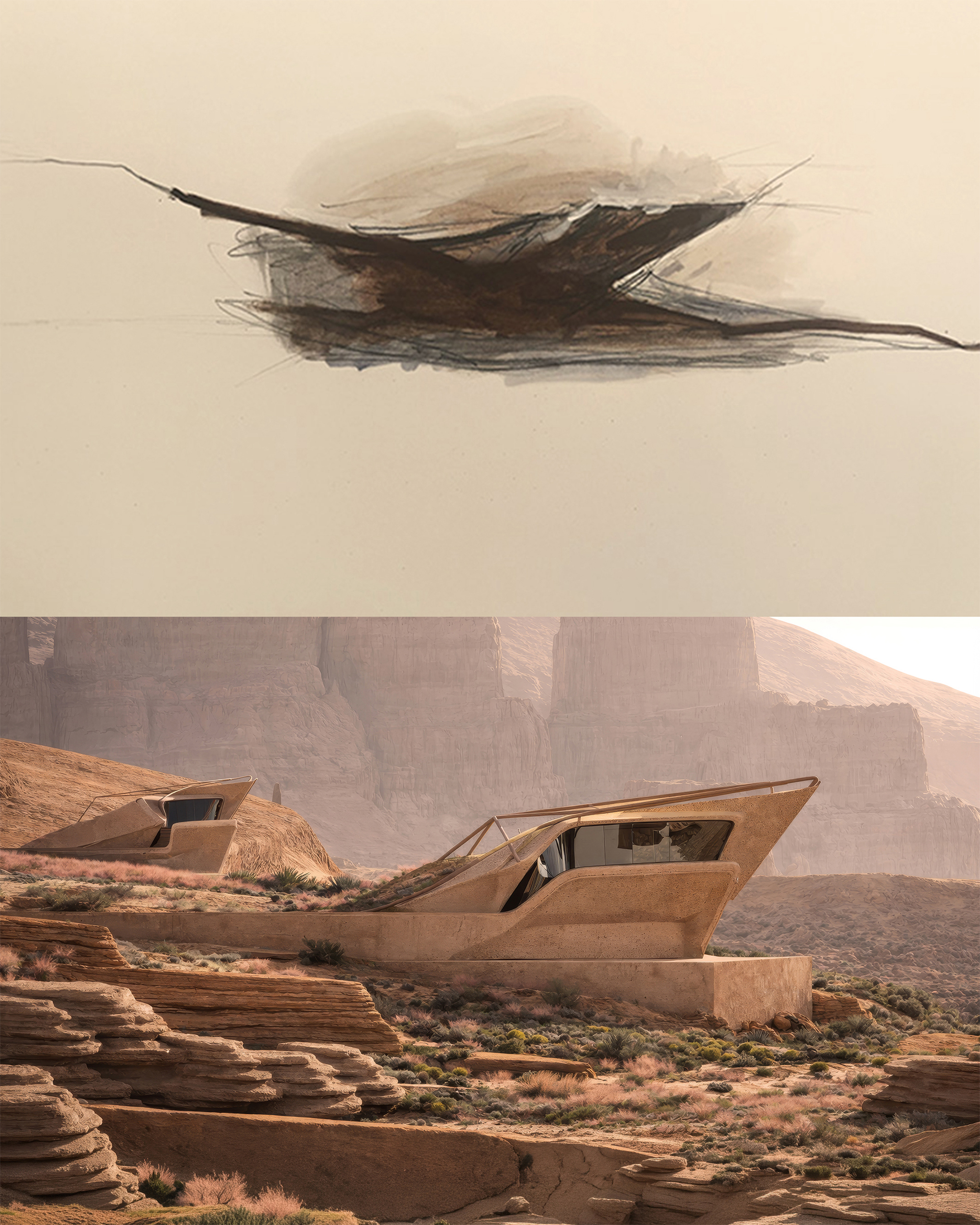
Conceptual Design and Morphological Experimentation
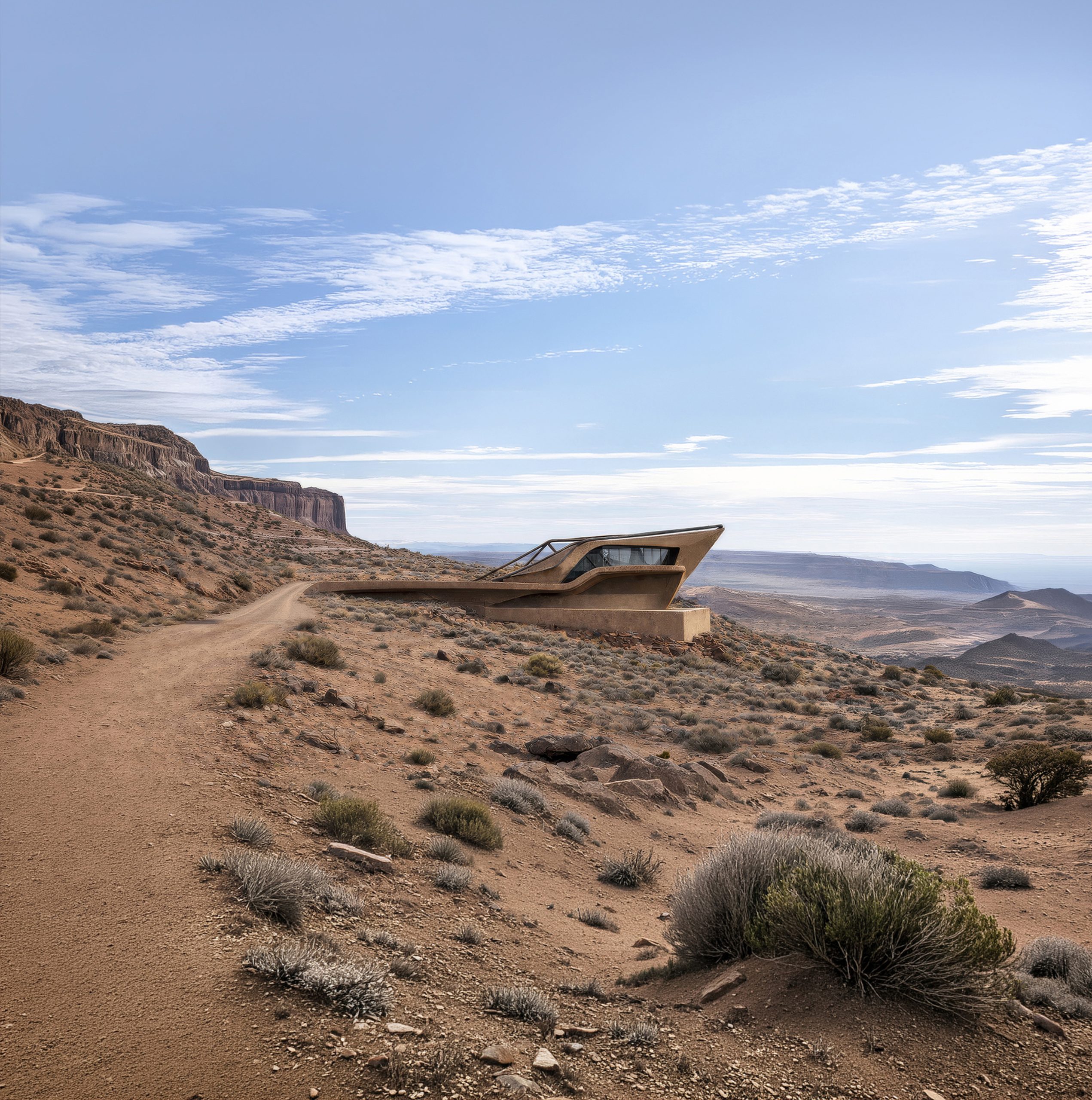
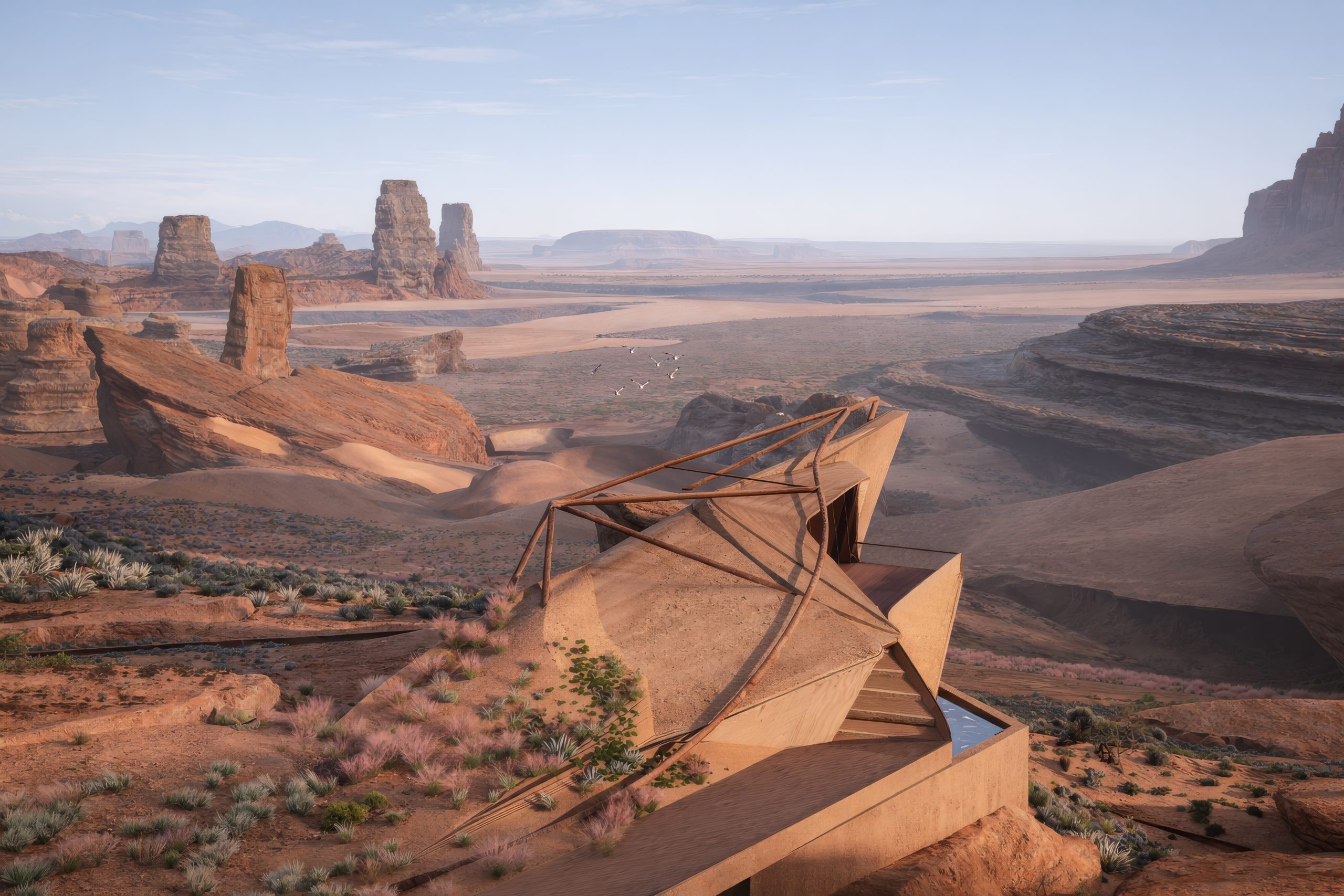
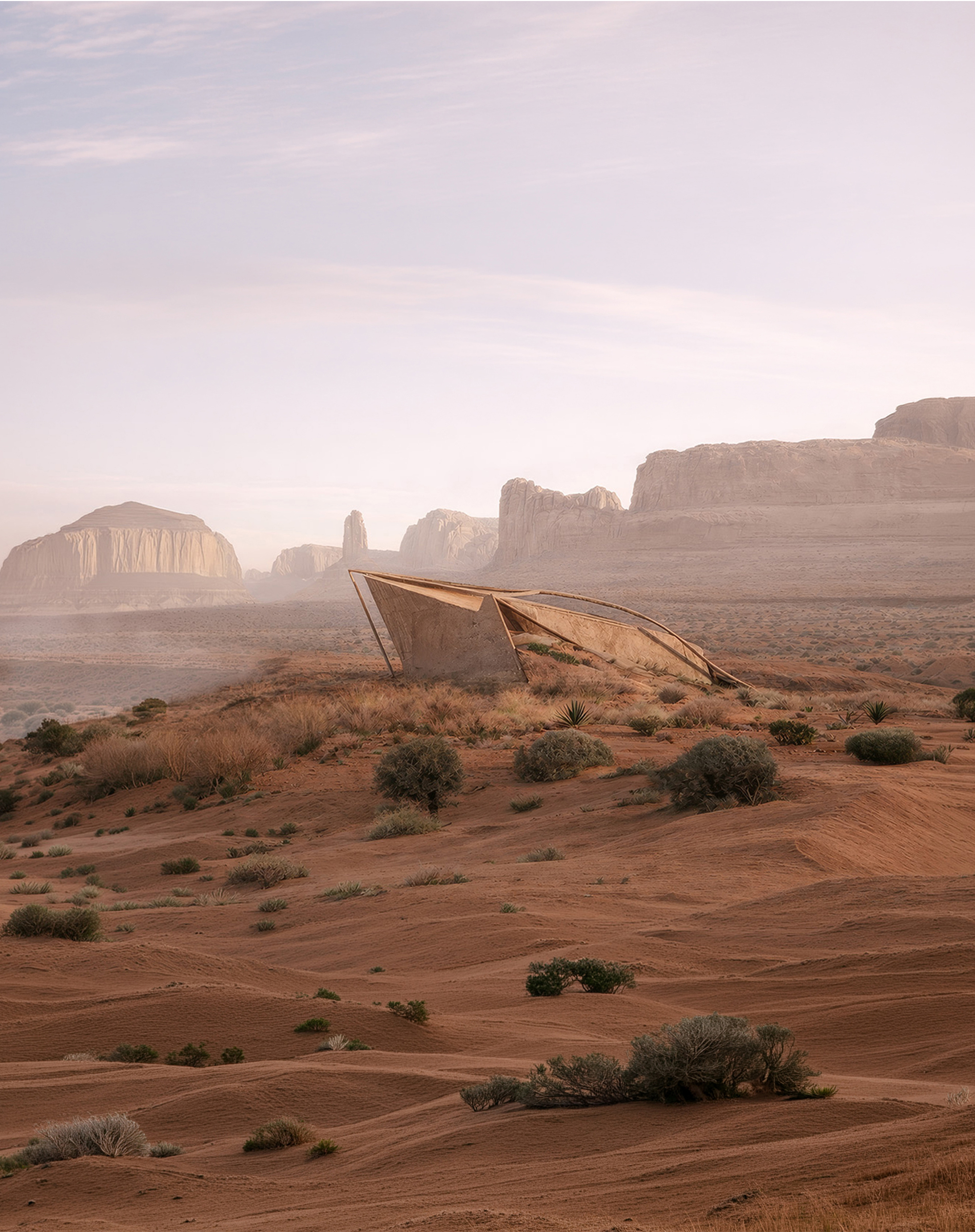
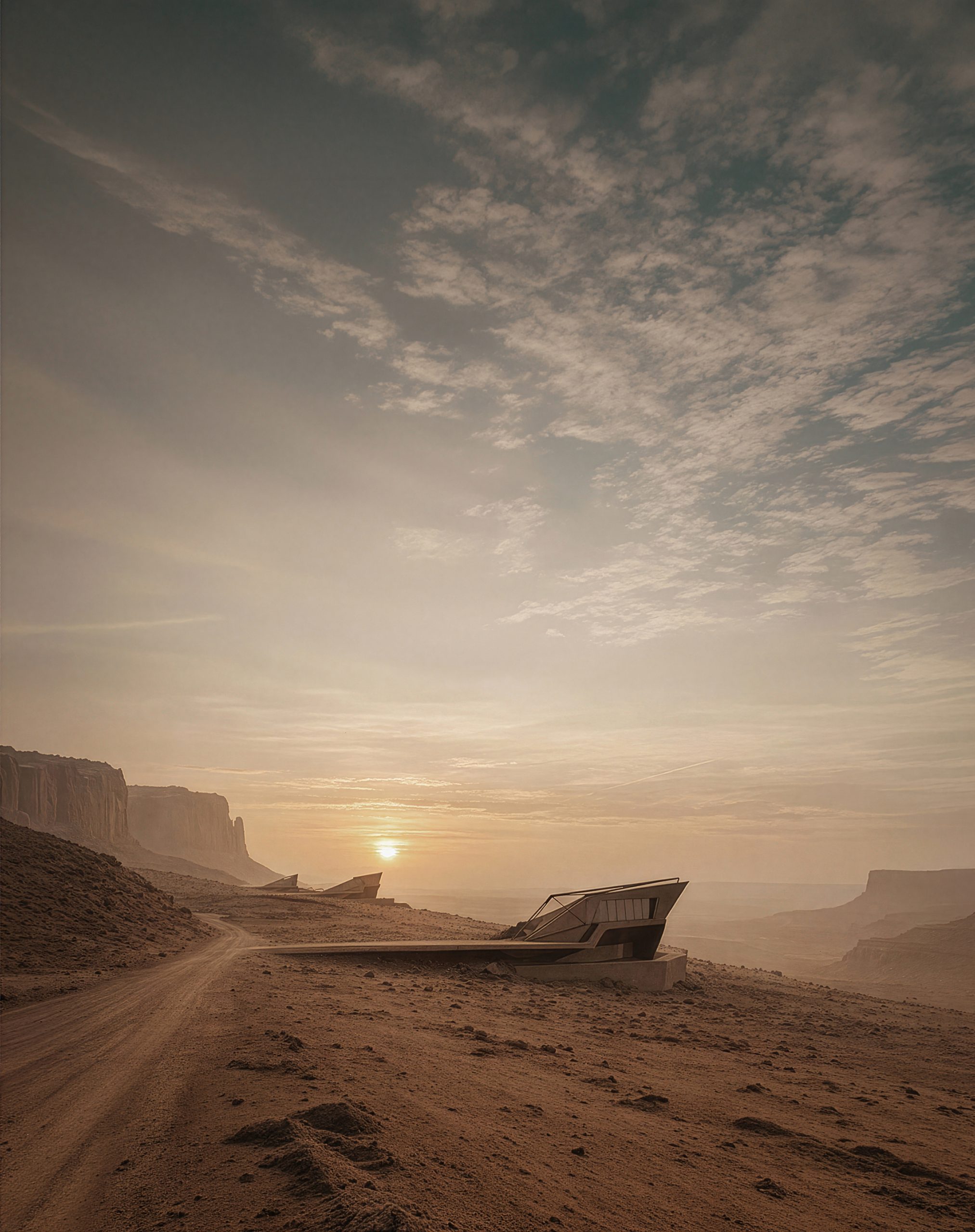
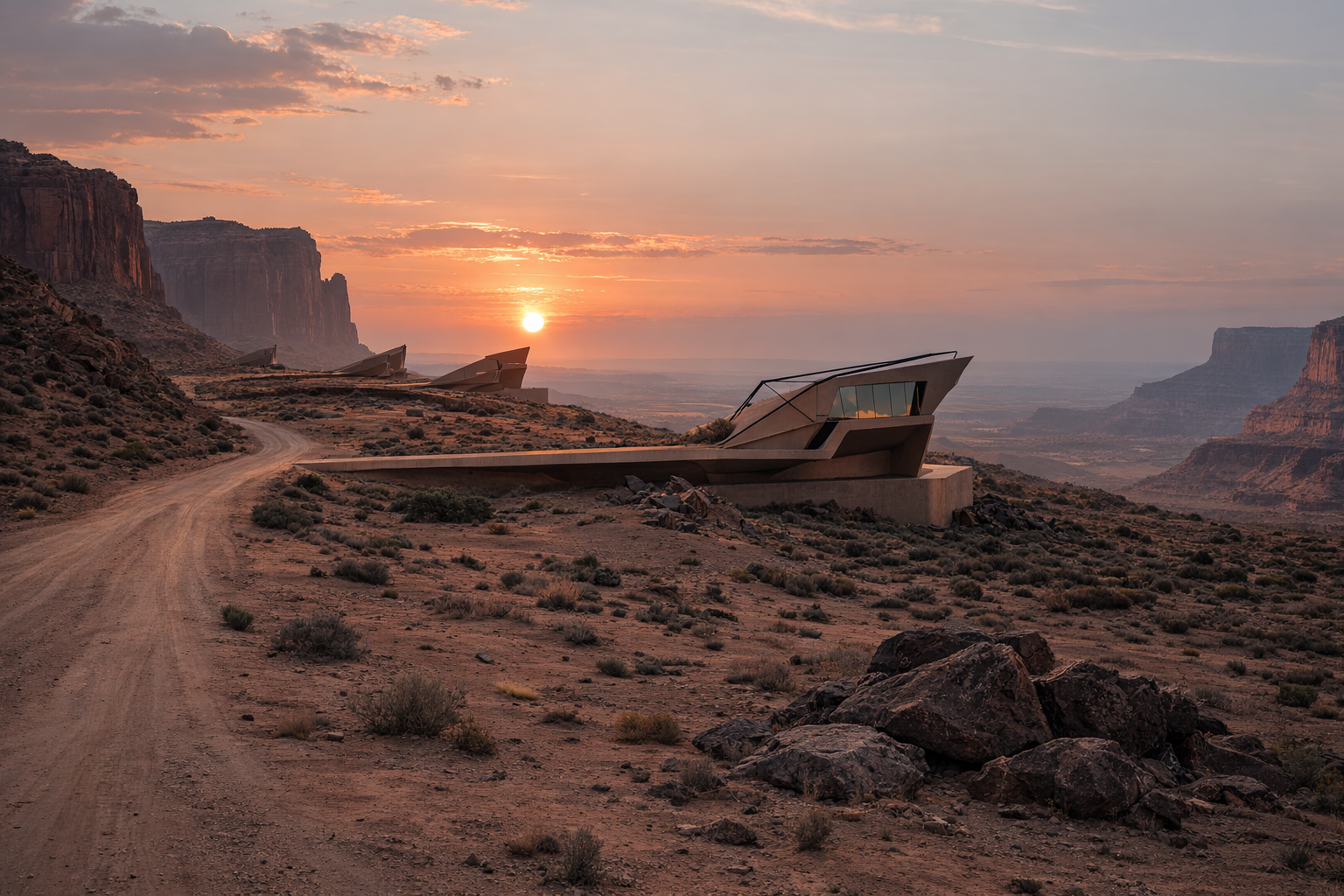
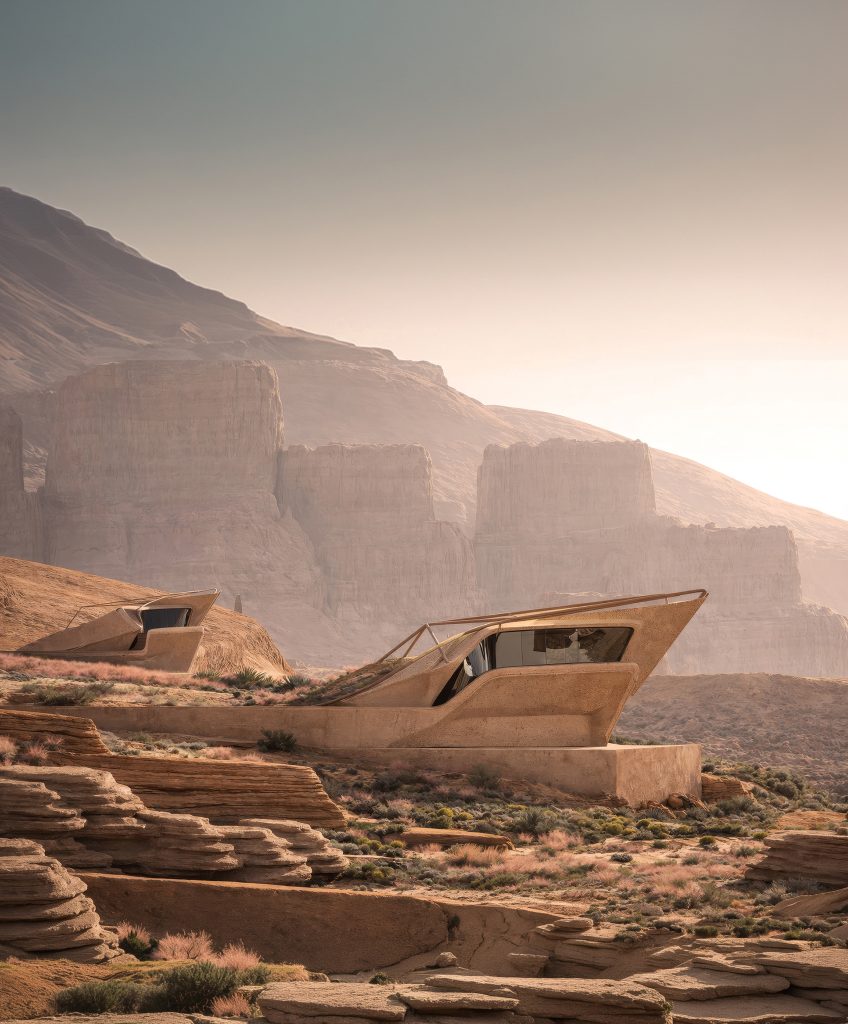
The core concept of the “Habitable Outcrop” focuses on creating a residence-observatory that does not impose itself upon the Utah landscape but rather emerges from it as a natural extension. The compositional process was based on visual experimentation with the region’s topography, translating mesas and canyons into a contemporary architectural proposal inspired by the landscape’s uniqueness. The structure is shaped as a low, elongated prism with inclined surfaces that mimic natural rocky protrusions.
Materiality and Integration
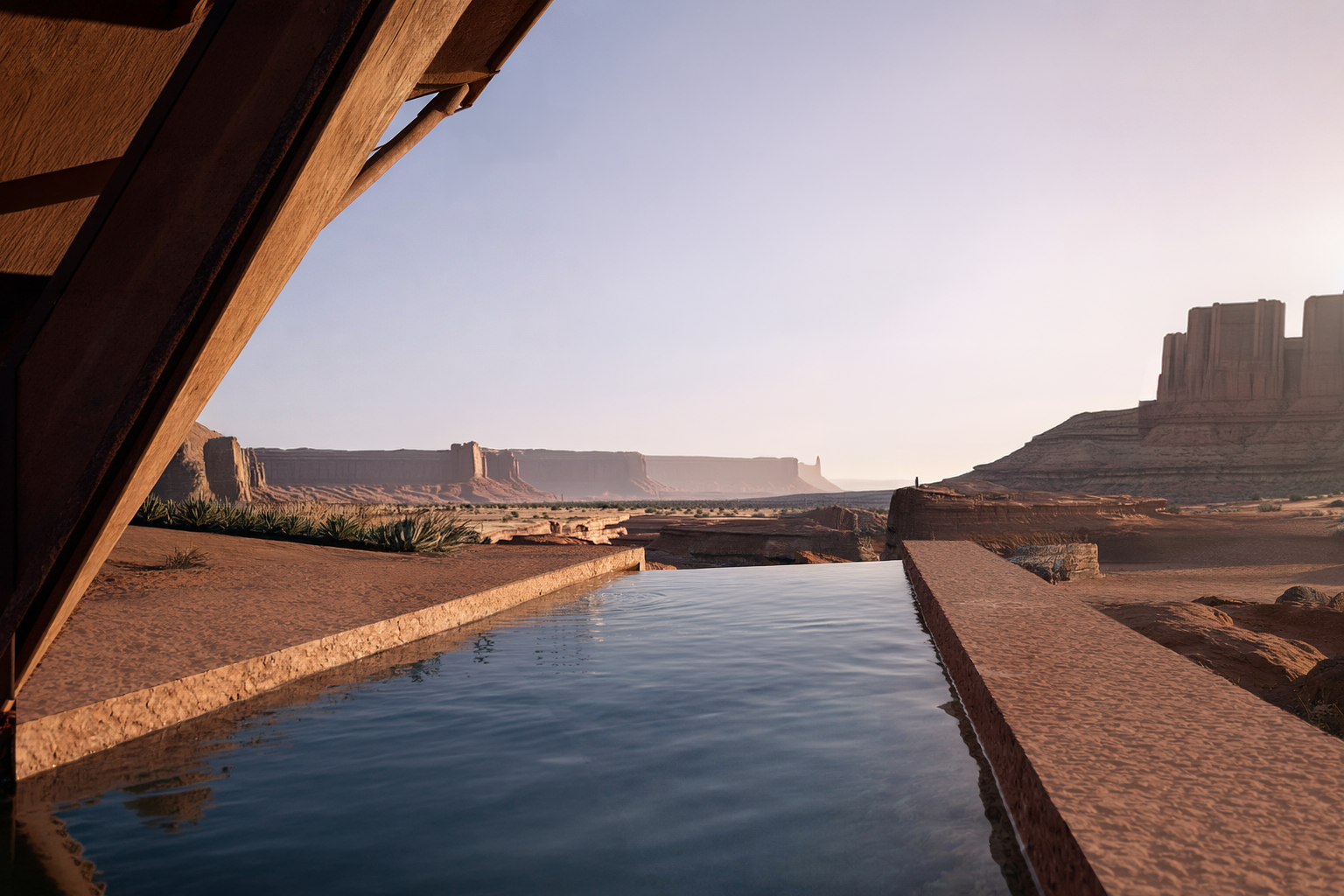
The residences were designed with a focus on landscape integration and durability against local environmental conditions. This objective is achieved through a material palette sourced from the Utah earth itself. The surfaces maintain a rugged texture, reminiscent of natural rock erosion. Finally, a portion of the residence is subterranean, a choice that allows the building to “dissolve” into the relief while providing natural cooling by harnessing the earth’s thermal mass.
Inhabitation as an Act of Observation
The transition from protected, semi-underground spaces toward the projecting volumes that “hover” above the ground intensifies the feeling of coexistence with the landscape. Daily life is transformed into a continuous experience of observation..
The residential capsules cover 150 sqm The bedroom areas are located in the subterranean section, while the communal areas and observation spaces extend onto a higher level. Access to these spaces is provided by an internal inclined slab, which enhances the uniqueness of the building’s typology.
Αrchitectural philosophy
The volumes are not treated as closed objects. Inclined planes, sharp geometries, and cantilevers produce a sense of tension, as if the form has been frozen in a moment of transformation. The relationship with the ground and the landscape is decisive. The volumes follow the natural slopes, emerging from the earth or appearing to float above it.
In this design, balance is not an end in itself; instead, interest is directed toward change, the intensity of forms, and their dynamic relationship with space. This creates environments that do not seek immediate acceptance but generate conditions of emotional “charge.” Beauty here is not calm; it is tense emerging through conflict, contrast, and the unpredictable, much like the desert landscape itself.